
Chalk That Heals?
How the Clove, Myrrh, and Tien Chi in X Chalk help your skin.
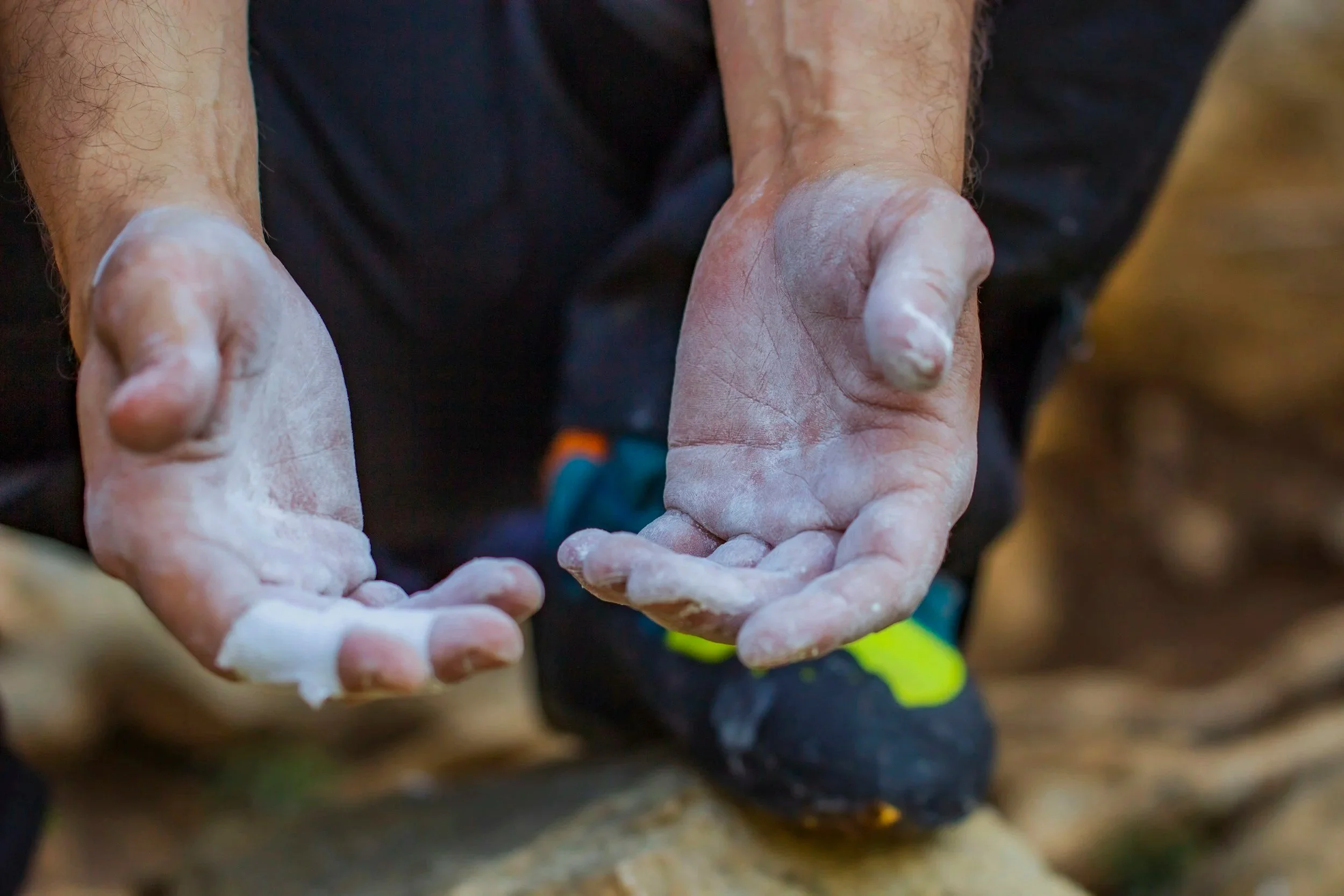
Every climber knows the deal. You chalk up, you crimp down, and somewhere around your third burn on the project your fingertips start to feel like sandpaper. Flappers, splits, raw tips, that one knuckle crack that just won’t close. Torn-up skin is the tax we all pay for time on the wall.
Most chalk does one thing: dry your hands. The problem is that plain magnesium carbonate dries out everything, including the skin you’re relying on. So you grip harder, your skin gives out faster, and you’re benched for two days waiting on a flapper to heal.
X Chalk is built differently. Alongside premium magnesium carbonate, every batch is blended with three botanicals chosen for one reason: they actively look after your skin while you climb. Here’s what clove, myrrh, and Tien Chi are doing in there and why it matters for your hands.
Clove: the antimicrobial that calms raw skin
Clove’s active compound, eugenol, is one of the more impressive natural antimicrobials out there. Research shows it disrupts bacterial cell walls and can even penetrate biofilms that resist ordinary antibiotics, with proven activity against staph and other common skin bugs. Eugenol is also a mild natural analgesic. Meaning, it quiets the nerve endings that fire when skin is irritated.
Why should a climber care? Because climbing is communal. You’re dipping into shared buckets, grabbing holds a hundred sweaty hands touched before yours, and then pressing all of that into your pores and micro abrasions. Eugenol gives X Chalk a built-in line of defense against the bacteria that turn a small skin tear into an angry infected one.
In plain terms: clove helps keep your hands protected from infection and relieves some of that hot, raw sting we are all familiar with.
Myrrh: the ancient wound-closer
Myrrh has been used on wounds since the ancient Greeks who used it to treat injured soldiers. Myrrh resin stimulates fibroblasts, the cells that rebuild skin tissue, and boosts collagen production. In one study, myrrh resin drove wound closure up by over 98% while its anti-inflammatory and antimicrobial compounds kept swelling and infection down.
For your hands, that’s the whole ballgame. The faster your skin regenerates, the faster you’re back on the wall. Myrrh in X Chalk means that every time you chalk up, you’re laying a tissue-repair agent directly onto the cracks and splits that need it most, turning your chalk bag from a drying tool into part of your recovery routine.
Tien Chi: circulation, repair, and fewer scars
Tien Chi (Panax notoginseng, also called San Qi) is a cornerstone of traditional Chinese medicine, prized for centuries for stopping bleeding and speeding healing. The science is genuinely striking: its “saponins” promote blood circulation, drive fibroblast and new blood-vessel growth, speed wound recovery, and all suppress scar formation.
That last part matters more than it sounds. Climbers build up thick, ridged scar tissue and calluses that eventually crack and tear in their own right. Tien Chi supports cleaner, smoother healing, so the skin that grows back is resilient rather than brittle. Better circulation to the fingertips also means faster delivery of everything your skin needs to rebuild between sessions.
Three ingredients, one goal: keep you climbing
Pull it together and the logic is simple. Clove guards against infection and takes the edge off raw skin. Myrrh rebuilds torn tissue and closes wounds faster. Tien Chi boosts circulation and helps skin heal stronger with less scarring. Layered over high-performance drying chalk, they turn the thing already in your hands into active skin care.
The result isn’t just better grip in the moment. It’s more sessions, fewer days lost to busted tips, and skin that holds up to the abuse climbing dishes out.
Your skin is your most important piece of gear. X Chalk is the only chalk built to protect it. Grab a tube and feel the difference.
A note on skin: botanical ingredients can occasionally irritate sensitive skin. If you have known allergies to clove, myrrh, or ginseng-family plants, patch-test before regular use. X Chalk supports healthy skin and recovery but isn’t a substitute for medical care on deep or infected wounds.