
The Science of Friction: Why Chalk Actually Works
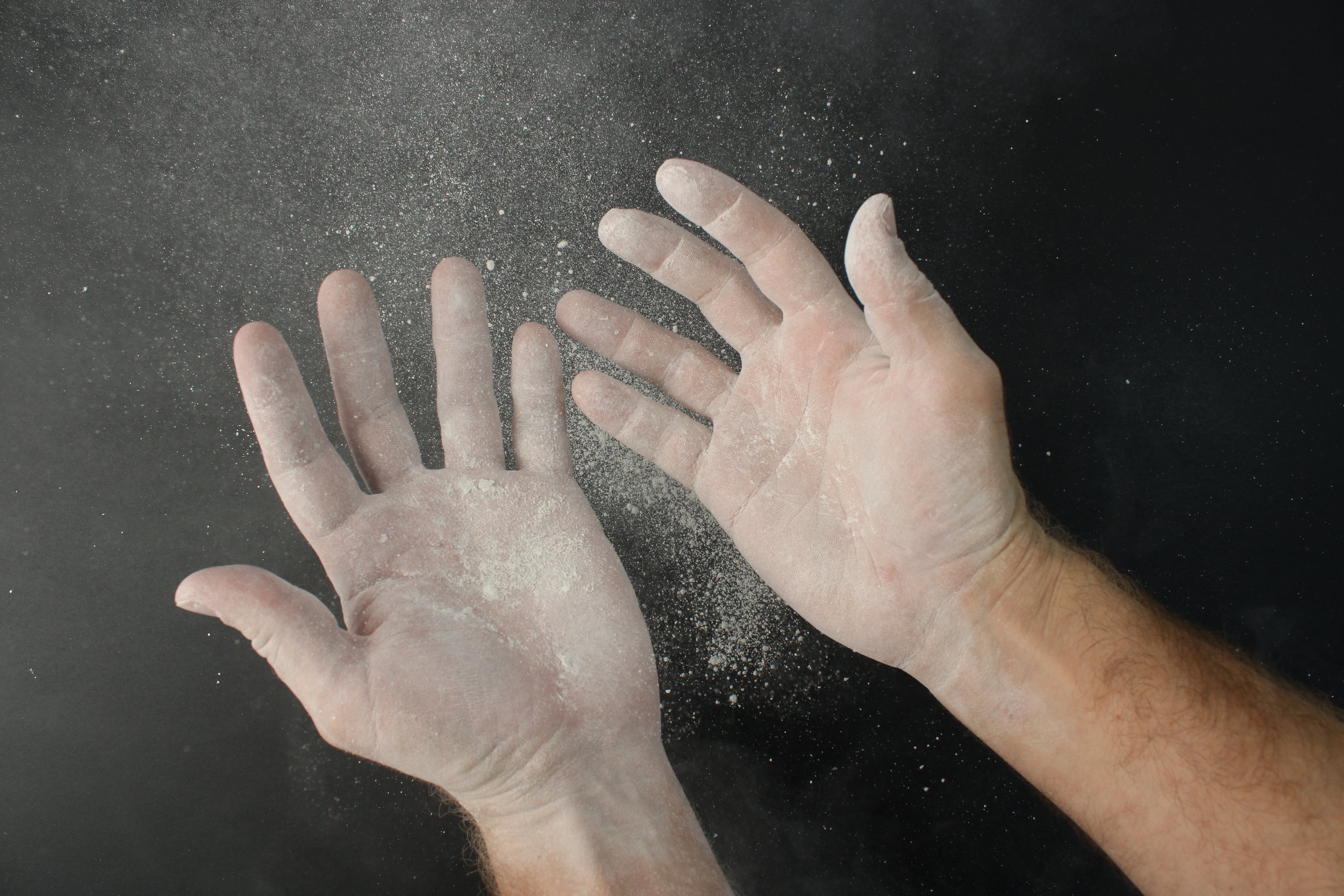
Ask any climber why they use chalk and you’ll get the same answer: “It helps you grip.” We treat it like magic dust. Dip in, and suddenly the hold feels stickier. But here’s the surprising part. The science says chalk doesn’t work the way most of us think. And once you understand what’s really going on, you’ll chalk up smarter.
Ask any climber why they use chalk and you’ll get the same answer: “It helps you grip.” We treat it like magic dust. Dip in, and suddenly the hold feels stickier. But here’s the surprising part. The science says chalk doesn’t work the way most of us think. And once you understand what’s really going on, you’ll chalk up smarter.
First, what is friction, really?
Friction is just the force resisting two surfaces sliding past each other. In climbing, those two surfaces are your fingertip skin and the rock (or plastic). How much friction you get is described by the coefficient of friction. The higher it is, the harder it is for your finger to slip off the hold.
The thing people miss is that friction between skin and rock depends heavily on the real contact area, meaning how much of your skin actually presses into the tiny bumps and pits of the surface. Soft, supple skin molds into those features and grips well. And critically, that whole system falls apart the moment your skin gets wet.
The real enemy: sweat
Sweat is a lubricant. A thin film of moisture between your fingertip and the hold acts like oil between two gears. It fills the microscopic gaps, reduces real contact, and lets your skin slide. As skin hydration goes up, the friction you can generate drops. That greasy, about to slip feeling on a hot day isn’t in your head. It’s physics.
So the enemy of grip isn’t “not enough stickiness.” It’s liquid on your skin.
What chalk actually does (and doesn’t)
Here’s where it gets interesting. Chalk, which is magnesium carbonate, is fantastic at absorbing moisture. Chalk doesn’t add grip on top of dry skin; it pulls the sweat off your fingers and returns your skin to that high-friction dry state. In short, chalk isn’t a grip additive, it’s a moisture manager.
The over-chalking trap
This is the part that’ll change how you climb. If chalk works by drying skin, more chalk is not automatically better. One study found that chalk on the hand improved friction, but chalk on both the hand and the hold actually reduced it. A thick, dusty layer can behave like ball bearings between your skin and the rock, doing the opposite of what you want.
The takeaway is simple. A thin, even coat on clean, dry skin beats a caked on glove of chalk every time. Application matters more than quantity. This is why X Chalk works so well, the fine grain coats your hands with thin even layer every time they go into your bag.
How to get the most friction
Put the science to work. Use just enough chalk to dry your hands, not to coat them white. Brush excess chalk off overused holds so you’re gripping rock, not powder. Keep your skin in good condition, because cracked, damaged skin can’t mold into the surface the way healthy skin does, so friction suffers. And re-chalk when your hands get damp again, not compulsively out of habit.
Where X Chalk fits
Understanding the science is exactly why we built X Chalk the way we did. A high-purity magnesium carbonate base means it does the one job that matters, pulling moisture off your skin, and it does that consistently, without cheap filler that turns to paste when it gets damp. And because healthy skin grips better than damaged skin, we blended in clove, myrrh, and Tien Chi to protect and repair your fingertips instead of stripping them raw. Better moisture management and better skin, both sides of the friction equation, in one bag.
So no, chalk isn’t magic grip dust. It’s applied physics, and now you know how to use it. Chalk smart, climb longer, and try X Chalk on your next session.